In the beginning God created the heavens and the earth.
Genesis 1:1
Most scientists agree that atoms are made up of three parts: protons, neutrons, and electrons. We don't know that for sure but we have a strong belief that they are. Here is an image of some Carbon atoms. It was taken with a transmission electron microscope (TEM) at a magnification of approximately 7 million. We can see the atoms. But notice that they're fuzzy. We can't see inside. No one has ever seen inside an atom. We strongly suspect that no one ever will.
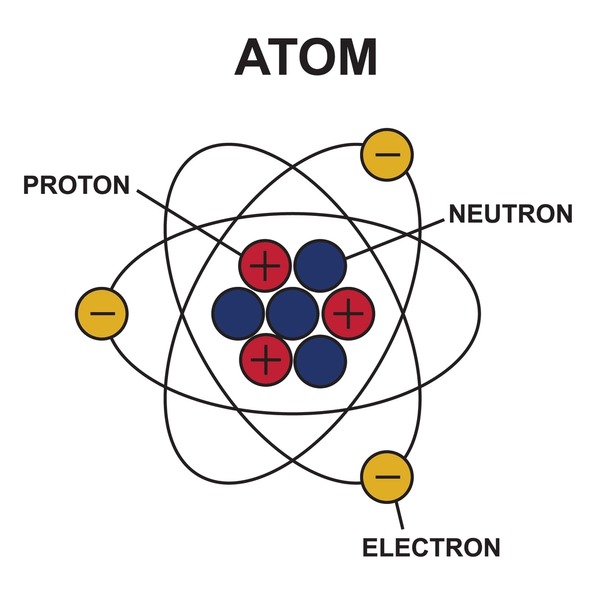
The theory that atoms are made up of three parts has been useful for understanding nature. Most religions believe in God. However, the idea that God is made up of three persons is a unique quality of only one religion on earth. Christianity. When God designed the universe, He signed nature with this fundamental truth about its building blocks. So that they mirrored His own fundamental nature.
3 parts for understanding nature.
3 persons for understanding God.
Isn't it interesting that these theories are the same? Everything comes in threes for the purpose of pointing you towards Him. God's signature.
This isn't merely an analogy to some animal in nature. This is an analogy to the fundamental building blocks of the universe. If we take this theory as evidence that God signed nature when He constructed His universe, then we must discard as possible all religions that don't have a triune understanding of their God. To my knowledge, Christianity is the only faith that makes this claim. All other religions must be wrecked.
When the second angel blew his trumpet, something like a large burning mountain was hurled into the sea. A third of the sea turned to blood, a third of the creatures living in the sea died, and a third of the ships were wrecked.
Reader Comments
Sign in to join the conversation.
Sign InBe the first to comment on this chapter.